
What “Complete and Balanced” Really Means for Your Dog
If you’ve ever picked up a bag of dog food and seen the phrase complete and balanced, it’s easy to assume it means the food is automatically high quality. But complete and balanced doesn’t always equal nutritious. What it really guarantees is that the food contains all the required nutrients on paper - and that’s only part of the story when it comes to giving dogs what they need to thrive.
At its core, complete and balanced means the recipe is designed to provide all the essential nutrients a dog requires, in the correct proportions, as their only food source. When done properly, it supports long-term health and helps ensure dogs receive everything they need - from protein and fats to vitamins and minerals*. This is a good thing, and it gives owners a level of reassurance. The challenge is that not all foods achieve this standard in the same way.
How the Standard Works
In Europe, dog food can only be labelled complete if it meets the nutritional requirements set out in the FEDIAF guidelines. A complete pet food is defined as one that is sufficient for a daily meal. If a recipe does not specify a life stage, it is assumed to be complete for all life stages and must meet minimum recommended nutrient levels for early growth and reproduction. *
In simple terms:
Complete means the food contains every essential nutrient.
Balanced means those nutrients are present in the correct proportions.
These guidelines are created and reviewed by independent veterinarians, scientists and animal nutrition experts. They act as a safety net, ensuring foods meet baseline nutritional standards. *
Where “Complete and Balanced” Can Fall Short
Two foods can both carry the phrase complete and balanced - and yet vary enormously in quality.
Some achieve this standard using high-quality, clearly identified ingredients that dogs can digest and benefit from. Others meet the same requirements using cheaper or heavily processed meat sources that are more difficult for dogs to absorb, reducing the biological value of the nutrients. **
It is also possible to create a complete and balanced food using:
- synthetic nutrients rather than whole-food nutrition
- large amounts of fillers to bulk out the recipe
- artificial preservatives, colours or flavours
- high levels of carbohydrate compared to protein
All of these can contribute to nutritional issues in the long term, even though the food technically meets the standard**. This is why some canine nutrition specialists argue that complete and balanced has become a marketing term rather than a true measure of quality***.
What Owners Should Really Look For
The solution isn’t to ignore the phrase complete and balanced - it’s to understand what sits behind it. Complete and balanced nutrition works best when it’s paired with high-quality ingredients that dogs can genuinely use.
A helpful way to think about it is like this:
the nutrient profile tells you whether a food is complete
the ingredients tell you whether it’s good.
Last week, we explored how the ingredient list reveals what actually makes up most of a recipe. When that ingredient list is clear, specific and built around nutritious foods - and when the recipe is also complete and balanced - owners get both security and substance in the bowl.
To make comparison easier, here’s a simple quality checklist owners can use:
✔ Recognisable meat or fish listed first
✔ Ingredients clearly named - not vague terms like “animal derivatives”
✔ Complete and balanced nutrient profile for the right life stage
✔ Minimal artificial additives and unnecessary fillers
✔ Feeding guidelines visible and based on weight and age
When these elements come together, a complete and balanced food becomes not just adequate - but genuinely beneficial.
How We Approach It at Dearboy Petcare
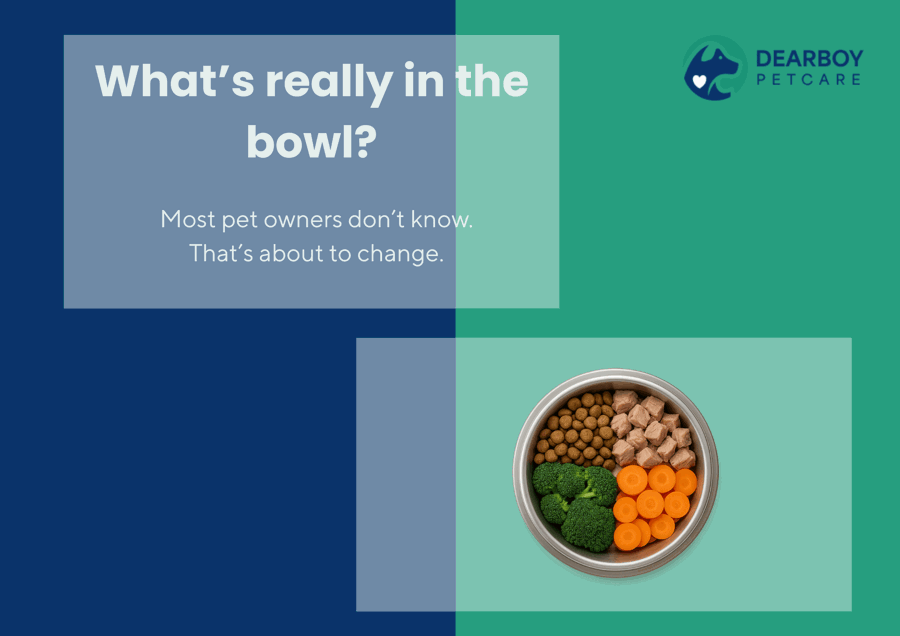
At Dearboy Petcare, complete and balanced nutrition matters to us when it is supported by transparency and high-quality ingredients that serve a real purpose for the dog. Owners deserve clarity, not confusion, and our aim is to make it easier to understand what is really in the bowl - and why it matters.
Follow along next week as we continue breaking down everyday feeding topics based on science, not marketing language, so every owner can feel informed, confident and proud of the food they choose for their dog.
*Purina.co.uk
**FrontierPets.com
***CanineNutritionist.co.uk
Download our easy to digest fact sheet here.